
Why Hurricane Island?
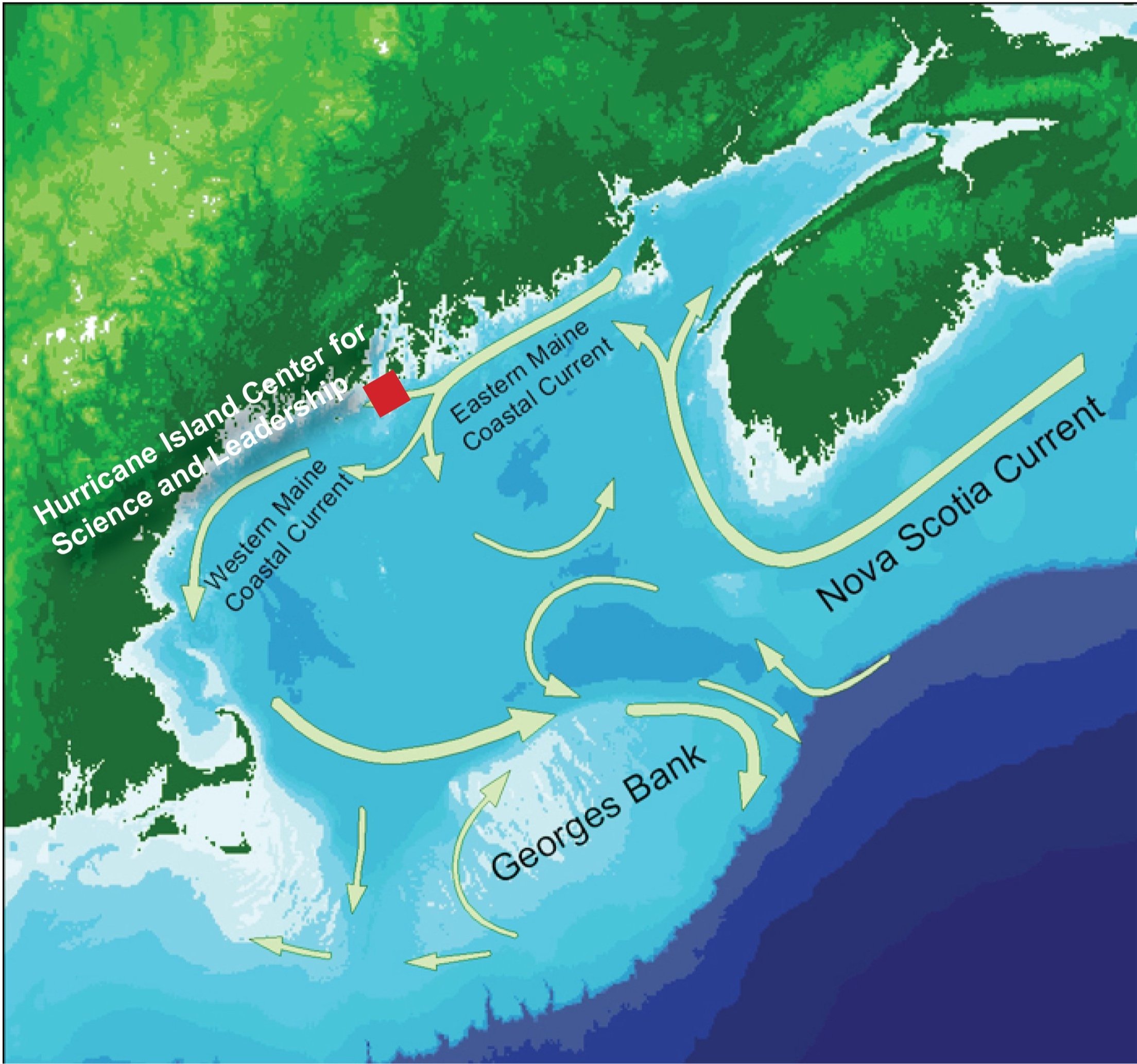
The Hurricane Island Field Research Station furthers our strategic goal to fully integrate science education and applied research. Hurricane Island, part of the Fox Islands Archipelago in Penobscot Bay, Maine is approximately 12 miles offshore from Rockland.
The 125-acre island is situated at the confluence of the Eastern Maine and Western Maine Coastal Currents, and the discharge from the Penobscot River to the north of the island forms a gradient of estuarine and marine habitat.
To the southwest, the western Maine coastal current causes water stratification and a zone of upwelling that affects the local ecology, and there is striking diversity in the bedrock geology to the west.
Hurricane Island is perfectly positioned to monitor and research climate change, fisheries biology and management, and alterations in Penobscot Bay and the wider Gulf of Maine ecosystem.
“A Scientific Bonanza!
”
Habitat
Four miles of trails that follow the island's perimeter and cross the ridgeline offer access to diverse intertidal and terrestrial habitats.
Terrestrial ecosystems include lower elevation spruce-fir forest, cattail marsh, granite outcrops, seaside goldenrod and goosetongue, open headland, and rose/bayberry maritime shrubland, and granite ledges frequented by seals and seabirds.
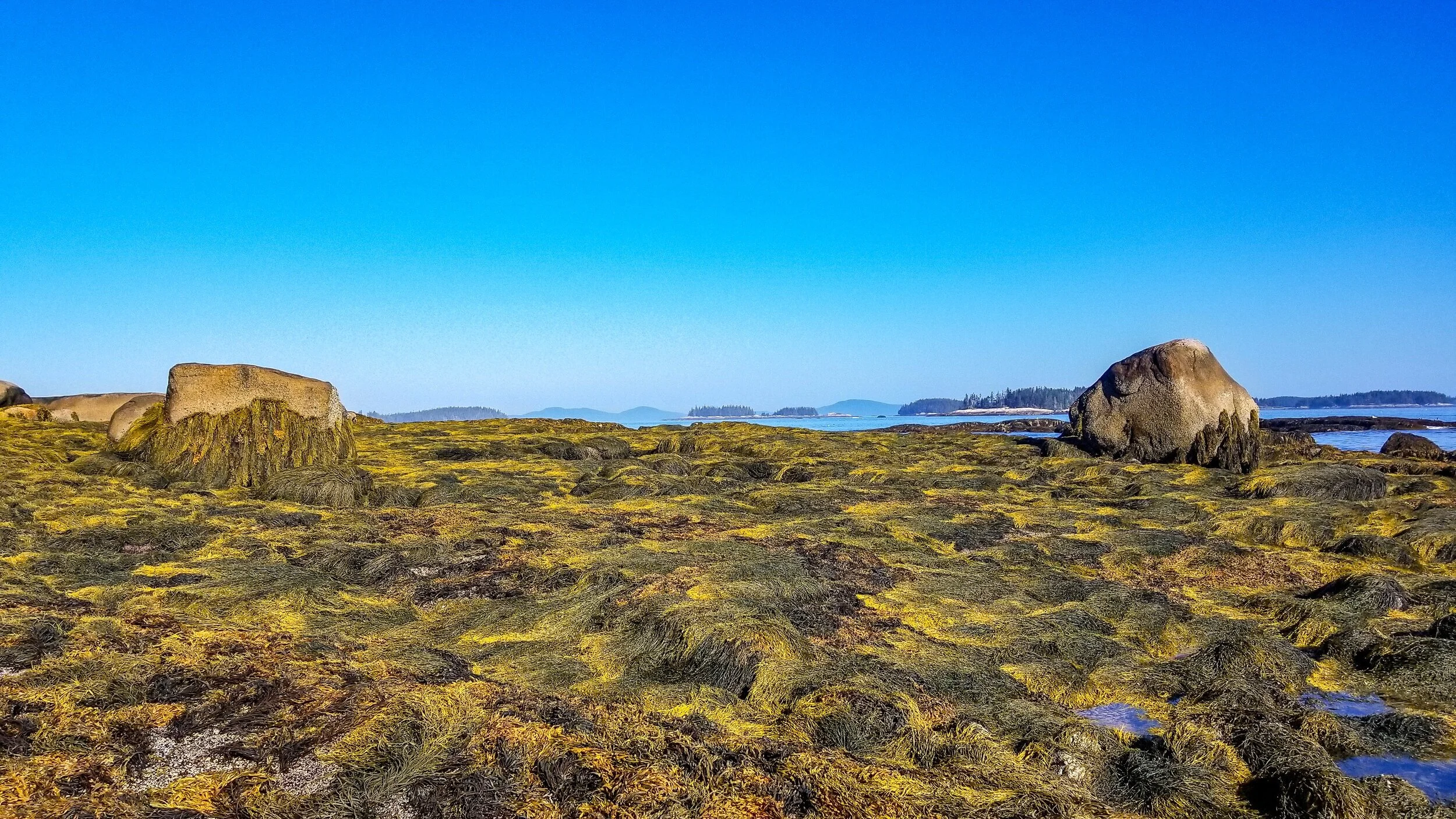
The local 10 foot tides reveal intertidal rockweed, cobble and sand beaches, and granite quays to collect marine organisms and explore coastal processes.
Sub-tidal habitat is rugged, high-relief seafloor, dominated by bedrock outcrops with areas of coarse-grained sediment.

Field Research Lab
Our sustainable shore facility is the visual epicenter for our mission, sustainable campus, and commitment to science research and education on Hurricane Island.
Amenities include:
Flowing Seawater Lab: Resident and visiting researchers, students, and teachers can sort and examine collections, keep organisms alive for study and experiments, and house & use monitoring and analytical equipment.
Dry Room: This space will be maintained as a dry area for microscopes, scales, a small field library, and computers for data entry, analysis, and access to spatially and topically relevant scientific literature.
Teaching Space: Researchers and educators will have a space to teach concepts and methods, share results, and offer a classroom component to field operations for classes up to 14 students.

Main Campus
Each year we welcome over 1,300 people to Hurricane as program participants, visiting researchers, cruisers, friends and family.
We have the capacity to house approximately 70 people in five cabins, five wall tents, two yurts, and a 25-person bunkhouse.
There are three designated conference and teaching facilities for groups of 20-70.
Our education laboratory for grades 6-12 is equipped with research equipment for up to 20 students such as field guides, binoculars, water quality testing supplies, microscopes, and transect tapes.
Our infirmary is equipped with wilderness medical kits and many our staff are certified in a range of wilderness medical training.

Aquaculture Research Site
Our Experimental Research Lease aquaculture farm is 3.2 areas and is located to the North of the island.
On this farm we currently have the capacity to grow five species – sugar kelp, winged kelp, scallops, mussels, and oysters – with options to approve additional species for research purposes.
At this time, the aquaculture farm maintains ~10,000 scallops of ages 0-4yo and two lines where sugar kelp is grown annually.
A 20’ x 10’ float was added in 2020 for research and education work space on the farm.

Vessels
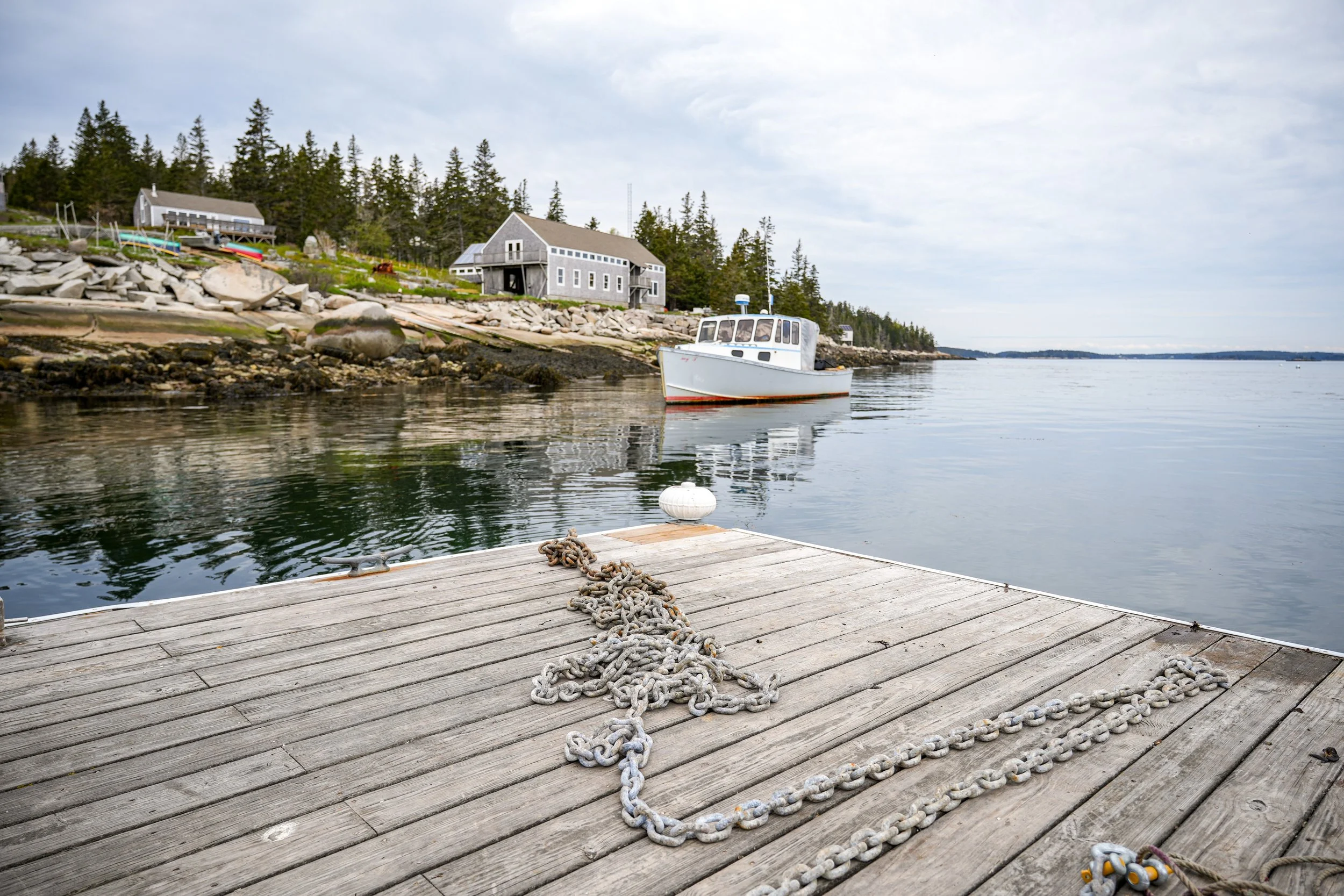
Hurricane operates a fleet of 5 vessels to service the island. Two vessels are equipped and licensed as research vessels to support our aquaculture site and oceanographic sampling. We employ Coast Guard licensed captains to operate the boats for paid program participants.
Our vessels are available for research that takes you beyond the shores of Hurricane with the ability to deploy and retrieve equipment, conduct at-sea data collection, support dive operations